
Managing your money is easier when you review your spending every week. While long-term financial planning is great for big-picture milestones, a single calendar month is often too long a window to spot a negative spending pattern before it does damage. If you want to take back control of your cash flow without feeling overwhelmed, using a physical weekly expense tracker printable is the perfect operational sweet spot. This high-quality resource helps you record daily expenses, organize spending by category, calculate weekly totals, and stay within your budget before your checking account faces unnecessary pressure.
Whether you’re budgeting for your household, tracking personal expenses, reducing unnecessary spending, or saving for major financial goals, this printable makes weekly money management simple and organized. Designed in standard US Letter (8.5 × 11 inches) size, it’s perfect for budget binders, planners, and personal finance journals. Keep it on your desk, your kitchen counter, or clip it into your primary financial binder to ensure your financial realities stay exactly where they belong: front and center.
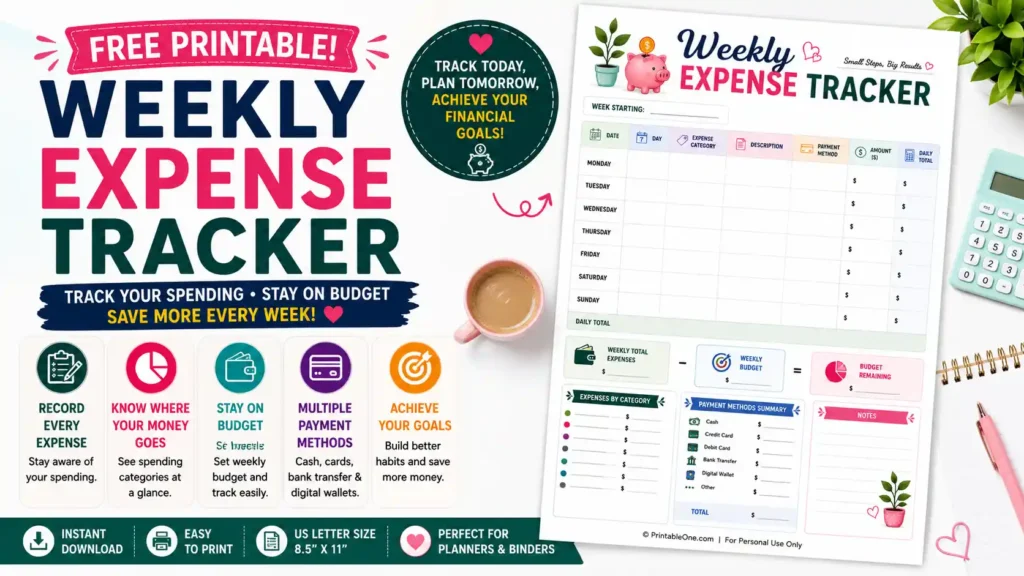
Download Your Free Weekly Expense Tracker Printable
Download Your Free Weekly Expense Tracker Printable
Stay on top of your weekly spending with this free Weekly Expense Tracker Printable PDF. Record daily expenses, organize spending by category, monitor your weekly budget, calculate totals, and build smarter money habits with this easy-to-use printable.
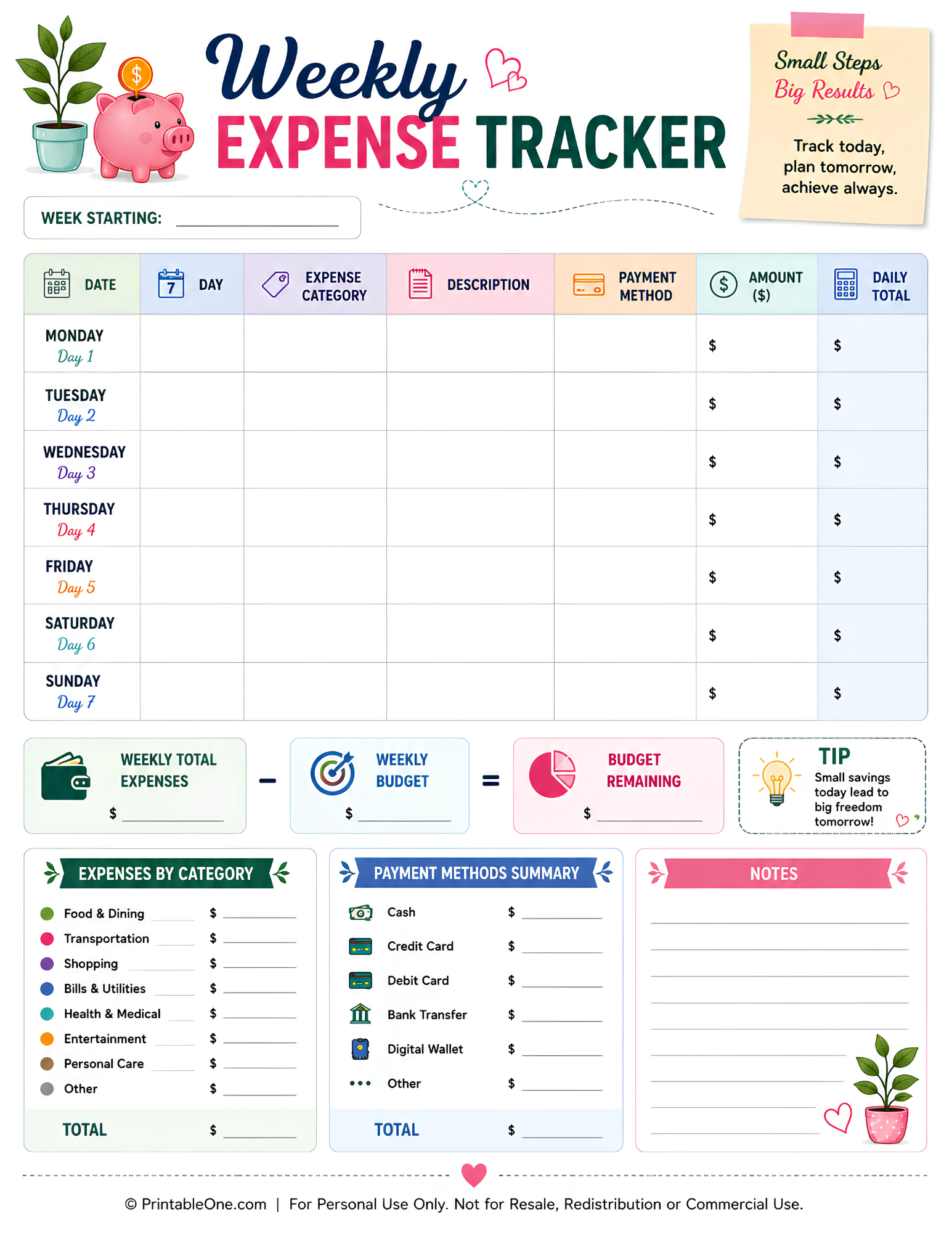
Note: This high-resolution PDF file is 100% free for personal use. Print as many weekly copies as you need to establish a stress-free, highly consistent money management routine.
What Is a Weekly Expense Tracker?
A weekly expense tracker printable is a targeted financial ledger designed to capture and categorize all your expenditures across a single seven-day period. Think of it as a comprehensive weekly expense log printable that breaks your broad monthly financial goals into small, actionable milestones. By focusing your attention on a shorter time horizon, you eliminate the cognitive fatigue often associated with long-term tracking, turning money management into an easy-to-run weekly ritual.
Consistently engaging with a physical weekly spending tracker is incredibly effective for behavioral change because it drastically speeds up your financial feedback loop. When you only audit your bank statements at the end of the month, you are looking at historical data—meaning the money is already gone, and it’s too late to fix any mistakes. A weekly tracking cycle allows you to see spending patterns as they develop in real time. If you notice you’ve overspent on dining out or casual retail by Tuesday afternoon, you can instantly pivot, adjust your discretionary habits for the remaining days, and protect your broad budget targets.
Additionally, using a dedicated weekly budget tracker helps you build ironclad financial discipline without the high pressure of daily balance sheets. It allows you to sort your variable and fixed costs into clear, visual blocks. Reviewing this data over seven days turns budgeting from a chore rooted in restriction into an active, empowering game of resource allocation. You learn exactly how your daily choices impact your wallet, giving you the real-time insights required to make smarter choices before any negative spending patterns become permanent habits.
What’s Included?
This premium weekly finance planner features an intuitive, highly functional layout designed to catalog every detail of your seven-day cash flow effortlessly:
- Week Starting: A dedicated slot at the top to note the exact starting date of your seven-day tracking period, keeping your archives completely organized.
- Date & Day: Clear, structured rows to document the calendar day each transaction occurred, from Monday through Sunday.
- Expense Category: A clean label section to sort your spending outlays efficiently (e.g., Groceries, Fuel, Entertainment).
- Description: A clear space to log the specific vendor, merchant, or service item purchased.
- Payment Method Summary: A dedicated column area to note whether you used cash, debit cards, credit cards, or digital mobile apps.
- Amount: A structured column to enter the exact dollar figure listed on your receipt.
- Daily Total: A built-in mathematical checkpoint to sum up your complete outgoings for each individual 24-hour cycle.
- Weekly Total Expenses: A high-visibility calculation zone at the base of the sheet to summarize your full seven-day outgoings.
- Weekly Budget: Your initial target spending limit for the week, providing a clear visual baseline to respect.
- Budget Remaining: A real-time balance box showing exactly how much financial margin you have left before the week ends.
- Expenses by Category: A mini data matrix to sort your outlays and quickly pinpoint your top cost centers.
- Notes Section: A highly flexible, open space for recording upcoming bill reminders, analyzing irregular expenses, or writing positive motivational goals.
- US Letter Size (8.5 × 11″): Native formatting for effortless home printing with clean borders and optimized grid lines.
- Instant Download: Immediate access to the print-ready PDF file so you can organize your current week without delay.
How to Use This Weekly Expense Tracker
To gain maximum financial clarity from your printable weekly expense worksheet, integrate this simple, ten-step framework into your routine.
Step 1: Write the Starting Date of the Week
Begin each tracking cycle by noting the week’s starting date at the top of your weekly budget worksheet. Keeping this filled out makes chronological filing inside your household finance binder completely seamless.
Step 2: Set Your Weekly Spending Budget
Look at your monthly fixed income and structural bills, determine your variable baseline, and write your exact target limit in the weekly budget box. Having a clear limit early gives you a concrete boundary to respect over the next seven days.
Step 3: Record Every Purchase Throughout the Week
Every single time you complete a transaction, log the purchase immediately on your expense tracker printable before the detail fades from your memory.
- Examples: Mid-week grocery hauls, regular fuel fill-ups, morning coffee runs, dining out with friends, online shopping orders, or weekend entertainment tickets.
Step 4: Select an Expense Category
Assign your purchase to a specific category line. Keeping your entries grouped consistently makes it incredibly simple to audit your data at the end of the week.
Step 5: Record Your Payment Method
Note exactly how the transaction was funded. Documenting this helps you keep your credit card balances transparent and makes reconciling your statements simple.
- Examples: Physical cash, credit lines, debit cards, bank wire transfers, or digital mobile wallets.
Step 6: Write the Amount Spent
Write down the exact dollar amount listed on your receipt. Do not round numbers down or omit the change; absolute accuracy is key to building real financial awareness.
Step 7: Calculate Each Day’s Total
At the close of each evening, pull out a calculator and add up your purchases for the day. Write this down in the daily total column to monitor the day-to-day speed of your cash outflow.
Step 8: Calculate Your Weekly Total Expenses
At the end of the seven-day cycle, add all your daily totals together. Enter this final figure in the “Weekly Total Expenses” box to see exactly what it cost to run your life for the week.
Step 9: Subtract Expenses From Your Weekly Budget
Subtract your weekly total expenses from your initial weekly budget to calculate your remaining balance. If you finished in the green, you’ve successfully created a surplus!
Step 10: Review Spending Patterns and Make Improvements
Look closely at your category totals. Identify where your cash went fastest, analyze any weekend spending spikes, and use these visual insights to adjust next week’s layout productively.
Benefits of Using a Weekly Expense Tracker
Integrating a physical weekly money tracker into your financial routine delivers major psychological and structural advantages that digital apps simply cannot match.
Track Every Expense
A physical sheet acts as an unfiltered mirror for your money habits. By manually writing down every transaction, you eliminate the cognitive detachment of digital spending, forcing yourself to account for every dollar.
Stay Within Your Weekly Budget
Managing a smaller, seven-day allowance is dramatically easier than stretching a massive monthly budget. A weekly timeline gives you highly manageable boundaries that help keep your spending behavior stable.
Reduce Overspending
Because you are tracking your cash flow across a short sprint, you create an immediate psychological hurdle for impulse purchases. You naturally pause before spending because you can see exactly how it will compress your remaining weekly margin.
Improve Saving Habits
When you successfully plug the minor cash leaks in your variable spending, your monthly surplus naturally grows. You can redirect these recovered funds directly into your high-yield savings goals, sinking funds, or retirement portfolios.
Build Financial Discipline
Consistency builds long-term success. Spending a few minutes with your tracking log every week trains your mind to treat money with intention, building the financial focus required for big wealth-building projects.
Identify Spending Patterns
A weekly layout makes cyclical habits glaringly obvious. You will quickly spot trends—like routine Friday night overspending or mid-week stress shopping—allowing you to create smart behavioral boundaries.
Reach Financial Goals Faster
Whether you are working hard to escape consumer debt, build an emergency cushion, or fund a down payment, weekly tracking speeds up your timeline by optimizing your cash deployment.
Make Better Budgeting Decisions
Empirical, short-term data removes the guesswork from personal finance. You can build your upcoming monthly plans on clear, proven history rather than vague, optimistic estimates.
Common Expense Categories
To keep your weekly spending log clean and highly functional, use these standardized categories to sort your transactions:
- Food & Dining: Restaurant meals, fast-food runs, coffee shop visits, bar tabs, and office convenience spending.
- Groceries: Primary supermarket trips, fresh produce fill-ups, household paper goods, and pantry staples.
- Transportation: Public transit passes, train fares, rideshare applications, parking fees, and road tolls.
- Fuel: Regular gasoline fill-ups or electric vehicle charging station costs.
- Bills & Utilities: Weekly portions of recurring utilities, mobile phone plans, or internet costs.
- Shopping: Clothing, footwear, home decor items, gadgets, and casual retail therapy purchases.
- Entertainment: Concert tickets, movie admissions, sporting events, and digital streaming rentals.
- Health & Medical: Pharmacy prescriptions, co-pays, first-aid essentials, and wellness products.
- Personal Care: Hair salon appointments, cosmetics, toiletries, and gym supplements.
- Education: Online course fees, textbooks, school supplies, or professional certification costs.
- Subscriptions: Software tools, streaming platform memberships, or monthly subscription boxes.
- Miscellaneous: Cash tips, postage, dry cleaning costs, or unexpected minor fees.
Tips for Better Weekly Budgeting
Simply printing out a weekly financial planner won’t transform your financial life; real change requires executing the routine cleanly. Use these pro strategies to optimize your results:
Review Expenses Every Evening
Do not leave your tracking tasks for the weekend. Spend two minutes every single night logging your receipts while the details are entirely fresh in your mind.
Save All Receipts
Always request a receipt at checkout or take a quick screenshot of your digital order confirmations. Having a clear paper trail ensures you never have to guess about a missing transaction when updating your records.
Use Consistent Expense Categories
Keep your labeling uniform across all your weekly sheets. Using the exact same categories makes it incredibly simple to add up your data when you transfer it to a monthly overview tracker.
Compare Spending Every Week
At the end of the month, line your four weekly sheets side-by-side. Look for recurring patterns, pinpoint your highest-spending weeks, and adjust your lifestyle approach to smooth out the spikes.
Set Realistic Weekly Budgets
Avoid the temptation to set an overly restrictive, stressful limit that forces you to cut out all lifestyle enjoyment. If you set goals that are impossible to maintain, you will quickly face burnout and abandon tracking altogether.
Reduce Unnecessary Purchases
Adopt the 24-hour rule for discretionary shopping. Before checking out an item online or buying an elective product in-store, wait a full day. More often than not, the impulse will fade completely.
Celebrate Weeks You Stay Under Budget
Acknowledge your hard work! If you finish a seven-day cycle inside your target budget margin, celebrate the win with a low-cost reward, like a movie night or a favorite home-cooked meal.
Plan Next Week’s Spending in Advance
Look ahead at your upcoming calendar. If you know you have a friend’s birthday dinner or a routine car maintenance appointment next week, build those costs into that specific sheet’s budget in advance.
Common Budgeting Mistakes
Protect your financial momentum by identifying and steering clear of these common week-to-week tracking traps:
- Ignoring Small Purchases: Disregarding small items like a dollar convenience store snack or a minor app purchase will leave a confusing, unexplained gap in your totals at the end of the week.
- Not Tracking Cash Spending: Physical cash is incredibly easy to spend mindlessly. Log cash transactions just as strictly as card purchases to keep your record completely accurate.
- Overspending on Weekends: Letting your discipline completely collapse between Friday night and Sunday evening can quietly wipe out all the hard work and savings you built up during the workweek.
- Forgetting Subscriptions: Overlooking micro-subscriptions that auto-renew on random days can quietly drain your checking account balance without your active awareness.
- Shopping Without a Budget: Walking into a store without a clear list and a set spending limit guarantees you will walk out with impulse items you don’t actually need.
- Not Reviewing Weekly Expenses: Filling out your worksheet but immediately closing it and hiding it in a drawer turns tracking into an empty chore. Always review the data to learn from your habits.
- Depending on Memory: Relying on mental math to track your spending virtually guarantees you will underestimate your actual outgoings by 20% to 30% every single week.
Weekly vs. Monthly Expense Tracking
Understanding how short-term weekly tracking pairs with your long-term monthly planning is essential for building a highly effective, comprehensive personal finance strategy.
| Feature | Weekly Expense Tracking | Monthly Expense Tracking |
| Operational Cadence | Reviews spending every 7 days for quick adjustments | Reviews overall monthly spending every 30 days |
| Agility Profile | Helps catch budget leaks fast and allows for real-time pivots | Shows long-term macroeconomic trends and seasonal changes |
| Tracking Velocity | Much easier to control daily variable and discretionary expenses | Better for tracking large structural bills and fixed cost planning |
| Behavioral Goal | Builds steady, sustainable weekly habits and daily mindfulness | Supports annual financial goals, net worth growth, and investments |
Who Should Use This Printable?
This highly adaptable weekly budgeting worksheet is designed to provide massive organization and structure to individuals across all walks of life:
- Students: An ideal tool for mastering the basics of cash flow early, managing tight weekly allowances, and budgeting for food and books.
- Families: A fantastic resource for tracking shared household variables, managing grocery runs, and controlling day-to-day miscellaneous outlays.
- Couples: Provides an objective, completely transparent framework for couples to discuss discretionary spending habits and stay aligned.
- Freelancers: Essential for managing irregular income streams, tracking daily business outlays, and keeping personal spending transparent.
- Small Business Owners: Great for cataloging minor daily out-of-pocket operational costs before migrating them to formal business accounting software.
- Budget Binder Users: Formatted to fit standard planner systems, serving as the daily tactical hub of your broad household finance binder.
- Anyone Who Wants Better Money Management: Whether you are working your way out of consumer debt or managing a high income, this worksheet brings valuable clarity to your daily habits.
Frequently Asked Questions
Is this Weekly Expense Tracker free?
Yes. This PDF resource is 100% free to download, print, and use for all personal finance tracking and budgeting purposes.
What paper size is it?
The printable worksheet is professionally formatted to standard US Letter size (8.5 × 11 inches), ensuring a clean, easy print on standard home machines.
Can I print multiple copies?
Absolutely! You can print out a bundle of 52 pages at the start of the year to build a complete weekly logging habit, or print pages as you need them for specific high-spend seasons.
Can I use one every week?
Yes. Using a fresh sheet every seven days gives you the cleanest view of your habits, helping you start every Monday morning with a clean slate and a focused financial mindset.
Is it beginner friendly?
Yes, it features a highly intuitive layout. You do not need any advanced financial or spreadsheet experience—simply grab a pen, track your purchases honestly, and add up the totals at the end of the week.
Can I laminate it?
Highly recommended! Laminating your sheet allows you to place it on your kitchen counter or desk and use dry-erase markers to update your numbers weekly, saving paper and keeping the habit completely friction-free.
Can I use it alongside other finance printables?
Definitely. This weekly tracker serves as the tactical foundation that feeds clean, accurate data directly into your broad monthly budget planners, income worksheets, and savings logs.
Related Printables
To build a fully customized, highly effective home management binder, check out these excellent complementary finance printables:
- Daily Expense Tracker Printable
- Income & Expense Tracker Printable
- Monthly Budget Planner Printable
- Weekly Budget Planner Printable
- Annual Budget Planner Printable
- Monthly Savings Tracker Printable
- Financial Goals Worksheet Printable
- Net Worth Tracker Printable
- Expense Tracker Printable
- Bill Payment Tracker Printable
- Subscription Tracker Printable
- Cash Envelope Tracker Printable
- Sinking Fund Tracker Printable
- Debt Payoff Tracker Printable
- Debt Snowball Tracker Printable
- No Spend Challenge Printable
- 52 Week Savings Challenge Printable
- 100 Envelope Challenge Printable
Final Thoughts
Tracking your expenses every week is one of the simplest and most effective ways to stay accountable, reduce financial anxiety, and make smarter choices with your money. By using this weekly expense tracker printable, you stop playing defense with your cash flow and start playing offense. You actively transition from a state of financial mindlessness to a position of absolute awareness and control. Lay out your weekly budget limit, record your purchases accurately as they happen, review your data every weekend, and eliminate the hidden leaks draining your wallet. Download your free printable today, stick to the seven-day process, and take control of your weekly finances with confidence.