
Achieving true financial freedom begins with a crystal-clear understanding of your cash flow. If you have ever reached the end of the month wondering where your hard-earned money disappeared, you are experiencing the classic gap between financial intention and financial awareness. To break this cycle, you need a tactile, visual system that brings absolute clarity to your household economy. Using a dedicated income expense tracker printable is the most reliable, hands-on strategy to monitor exactly how much money enters your household and where every single dollar goes.
Whether you are trying to scale up your personal savings, build a rock-solid emergency fund, eliminate high-interest consumer debt, or manage cash flow for a side hustle, tracking your cash flow on paper removes the guesswork from personal finance. This clean, user-friendly printable document is meticulously designed in standard US Letter size (8.5 × 11 inches). It is optimized to slide perfectly into your primary budget binder, household management planner, or personal finance journal so that your financial realities remain front and center.
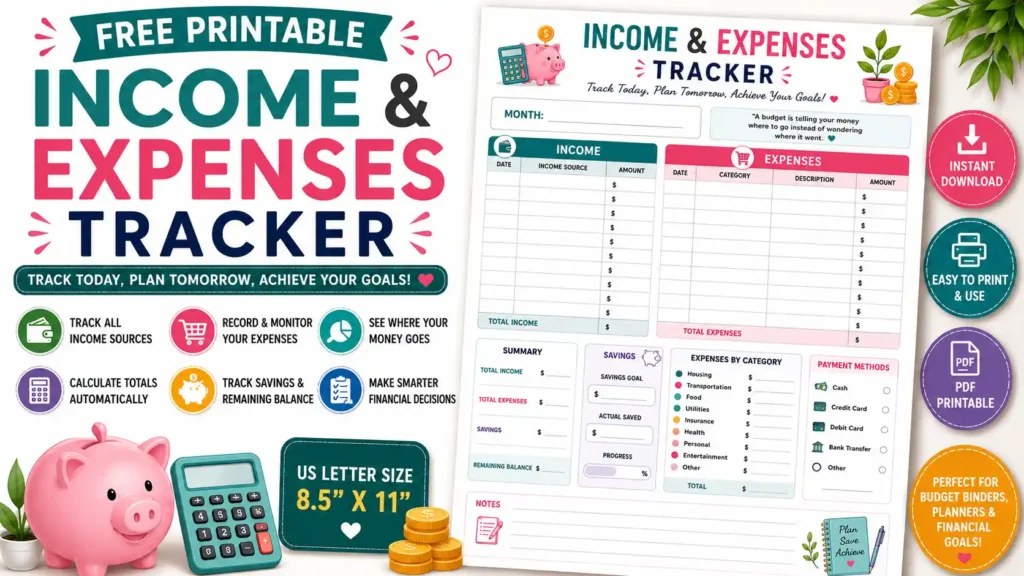
Download Your Free Income & Expense Tracker Printable
Download Your Free Income & Expense Tracker Printable
Stay on top of your finances with this free Income & Expense Tracker Printable PDF. Record income, track daily expenses, calculate totals, monitor your remaining balance, and build better money habits with this easy-to-use monthly finance worksheet.
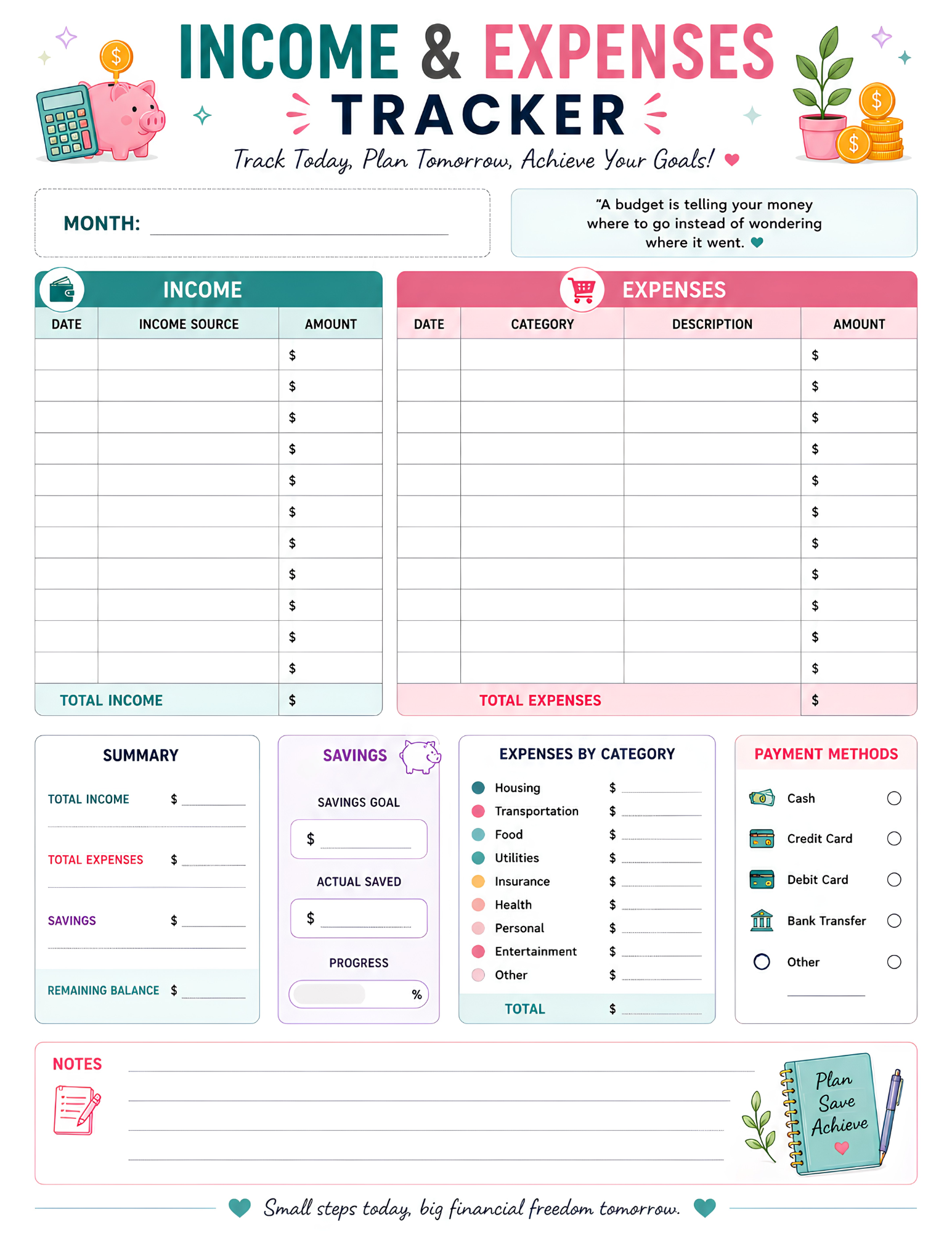
Note: This high-resolution PDF file is completely free for personal use. Print as many sheets as you need to take control of your financial narrative and build lifelong money management habits.
What Is an Income & Expense Tracker?
An income expense tracker printable is a structured, comprehensive ledger engineered to capture both sides of your monthly financial equation: your total earnings and your total expenditures. Think of it as a physical income and expense worksheet that acts as a financial mirror. It reflects the exact real-time health of your personal economy, translating abstract digital transactions into concrete, undeniable line items. Unlike complex, automated software that you can easily ignore, a physical worksheet requires active engagement, forcing you to consciously acknowledge every single financial decision you make.
Consistently utilizing a monthly finance tracker is vital for long-term budgeting success because it establishes baseline awareness. Most people do not fail at budgeting because they lack math skills; they fail because they underestimate their casual spending. A five-dollar gourmet coffee here, a quick fast-food run there, and a few forgotten digital subscriptions silently bleed a checking account dry. By logging your transactions manually on a physical sheet, you create a psychological speed bump. This simple practice disrupts impulse spending patterns and replaces mindlessness with deliberate financial intention.
Furthermore, reviewing an integrated money management printable at the conclusion of each 30-day cycle provides the data necessary to make highly informed financial decisions. It shifts you out of a reactive state—where you are constantly panicking over low account balances—and places you firmly into a proactive state. When you can see your exact financial margins laid out on paper, you can confidently determine whether you need to curb discretionary spending, negotiate recurring utility bills, or scale up your income streams to reach your primary wealth-building milestones.
What’s Included?
This premium personal finance worksheet features an intuitive, dual-ledger layout optimized to organize every detail of your monthly cash flow effortlessly:
- Month: A dedicated space at the top of the page to establish the tracking period, allowing you to build an orderly chronological archive over the course of the year.
- Income Table: A clean, multi-line ledger designed specifically to capture all variations of your incoming revenue.
- Date: When the funds were officially deposited or received.
- Income Source: The originating entity (e.g., primary employer, freelance client, marketplace sale).
- Amount: The exact net dollar value deposited into your account.
- Expense Table: A comprehensive tracking matrix engineered to catalog your outward cash flow.
- Date: The exact calendar day the transaction occurred.
- Category: The specific budget bucket (e.g., Groceries, Housing, Transportation, Entertainment).
- Description: A brief note detailing the specific vendor or purchase item.
- Amount: The precise dollar figure spent.
- Total Income Summary: A high-visibility calculation box to aggregate all your monthly earnings into a singular macro-number.
- Total Expenses Summary: A centralized summation zone to add up your combined fixed and variable costs.
- Remaining Balance Box: The ultimate financial metric—your net income minus total expenses—revealing your exact monthly profit or loss margin.
- Savings Summary: A dedicated section to track how much surplus cash was successfully diverted into emergency funds, sinking funds, or investment vehicles.
- Expense Categories Key: A helpful reference sidebar to keep your transaction classifications uniform and orderly.
- Payment Method Tracker: A subtle column layout or checklist to note whether a transaction was executed via cash, debit card, or credit card to assist with bank statement reconciliation.
- Notes Section: A flexible, open-ended canvas for recording financial anomalies, documenting unseasonable utility spikes, or brainstorming budget adjustments for the upcoming month.
- US Letter Size (8.5 × 11″): Formatted natively for standard US printing margins to ensure zero clipping or scaling distortions on home printers.
- Instant Download: Immediate, unlimited access to the crisp, professionally designed PDF asset.
How to Use This Income & Expense Tracker
To gain maximum financial clarity from your printable finance worksheet, adopt this systematic, step-by-step routine into your weekly and monthly schedule.
Step 1: Write the Month
Begin by filling out the designated month and year slot at the absolute top of your printable budgeting worksheet. This simple step establishes organizational boundaries and ensures your files remain clean when archived sequentially.
Step 2: Record Every Source of Income
Every single time funds hit your bank accounts, immediately note it down inside the income matrix. Do not limit this section strictly to your primary corporate paycheck.
- Examples: Base salary earnings, freelance payouts, contract consulting retainers, dividends or interest distributions, profits from selling unwanted items online, cash gifts, or side hustle revenues.
Step 3: Write Every Expense
Develop the disciplined habit of logging every single expenditure without exception. Keep your receipts or open your online banking portal every few days to migrate transactions over to your expense log printable.
- Examples: Fixed shelter costs (mortgage/rent), fluctuating utility payments, grocery hauls, fuel fill-ups, insurance premiums, streaming subscriptions, dining out, and minor cash outlays.
Step 4: Calculate Total Income
At the exact conclusion of the calendar month, take a calculator and add together every individual entry listed inside your income table. Write this grand total clearly into the designated “Total Income” summary box.
Step 5: Calculate Total Expenses
Similarly, add up every single entry located within your expense ledger. Combine both your fixed structural bills and your variable lifestyle purchases, then write the aggregated sum into the “Total Expenses” summary box.
Step 6: Find Your Remaining Balance
Subtract your Total Expenses from your Total Income. The remaining figure is your true monthly financial baseline. If the number is positive, you have operated at a healthy surplus (profit). If the number is negative, you are running a deficit, meaning you are living beyond your means and relying on debt or cash reserves to bridge the gap.
Step 7: Record Your Savings
Document exactly how much of your remaining positive balance was safely swept into high-yield savings accounts, specialized sinking funds, or retirement investment portfolios. This step directly reinforces your wealth-building momentum.
Step 8: Review Your Spending Habits
Look over your completed ledger objectively. Group your expenses by category and analyze the percentages. Examine how much money went toward mandatory needs versus elective wants, and evaluate whether your spending patterns truly align with your long-term values.
Step 9: Adjust Next Month’s Budget
Use the empirical data from your review to optimize your upcoming financial goals. If you notice your grocery costs or dining metrics are unsustainably high, set a realistic cap for the next 30 days and monitor it actively using a fresh household budget worksheet.
Benefits of Using an Income & Expense Tracker
Transitioning from digital-only oversight to a physical finance planner printable delivers unique strategic advantages that significantly enhance your financial wellness.
Understand Your Cash Flow
You cannot effectively manage what you do not accurately measure. Tracking provides an unfiltered look at the velocity of your money, mapping out exactly how quickly revenue streams disappear into specific consumer categories.
Control Spending
A written ledger introduces instantaneous behavioral accountability. Knowing that you must manually record an impulse purchase on paper creates a moment of mindfulness, which naturally curbs unnecessary spending.
Build Better Budgeting Habits
Sound budgeting is built entirely on consistency and repetition. Interacting with your transaction data on a regular basis systematically builds the financial muscles required to maintain clean money management habits for life.
Save More Money
When you meticulously eliminate hidden cash leaks from your expenses, you automatically create a larger monthly surplus. This extra cash can be funneled directly into your savings accounts or investment portfolios.
Reduce Financial Stress
Anxiety thrives in financial ambiguity and ignorance. When you strip away the mystery and lay your income and expenses out clearly on paper, the underlying stress disappears, replaced by control and confidence.
Track Monthly Expenses
A physical sheet acts as a clean running log, making it incredibly easy to cross-reference transactions against your digital bank records to instantly catch billing errors, duplicate charges, or forgotten auto-renewals.
Identify Spending Patterns
Tracking reveals your personal financial triggers. You will quickly begin to spot critical behavioral trends—such as overspending on takeout during stressful work weeks or splurging on weekends—allowing you to proactively adjust.
Reach Financial Goals Faster
Whether your dream is purchasing a home, escaping consumer debt, or retiring comfortably, tracking speeds up your timeline. It optimizes your cash deployment, ensuring every dollar is used efficiently to build your net worth.
Common Income Sources
To ensure your income ledger is fully comprehensive, remember to track every form of compensation or inflow, including:
- Salary / Wages: Regular, predictable earnings generated from your primary full-time or part-time employment.
- Freelancing / Contract Work: Revenue derived from independent consulting, graphic design, writing, or trade services.
- Business Income: Net profits extracted from regular business operations, e-commerce stores, or service agencies.
- Rental Income: Cash flow collected monthly from real estate tenants or short-term vacation rental properties.
- Investment Income: Dividends from index funds, interest earned from high-yield savings accounts, or capital gain distributions.
- Side Hustles: Incoming money generated from gig-economy apps, food delivery, ridesharing, or tutoring.
- Bonuses / Commissions: Performance-based corporate payouts, holiday stipends, or sales commissions.
- Refunds / Rebates: Cash returned from overpayments, tax returns, or merchant product returns.
- Government Benefits: Social security payouts, disability assistance, or child tax credits.
- Other Income: Cash collected from yard sales, hosting roommates, or unexpected cash gifts.
Common Expense Categories
To keep your printable expense tracker organized and highly actionable, group your transactions into these standard, clear categories:
- Housing: Mortgage payments, rent, property taxes, HOA fees, and routine home maintenance costs.
- Utilities: Electricity, natural gas, water, sewer, trash collection, internet, and mobile phone plans.
- Transportation: Auto loan payments, vehicle insurance premiums, fuel, public transit passes, parking, and maintenance.
- Groceries: Whole foods, household staples, pantry essentials, and necessary bathroom items.
- Insurance: Health, dental, vision, life, disability, and umbrella insurance policies.
- Healthcare: Medical co-pays, prescription medications, dental procedures, and physical therapy sessions.
- Dining Out: Restaurant meals, fast-food runs, coffee shop visits, bar tabs, and food delivery services.
- Shopping: Clothing, footwear, home decor, furniture, beauty products, and casual retail purchases.
- Entertainment: Concerts, sporting events, movie tickets, travel excursions, and streaming service subscriptions.
- Education: College tuition, student loan interest payments, textbooks, school supplies, and professional certifications.
- Debt Payments: Credit card minimums, personal loan balances, and payment plan bills.
- Savings: Core contributions toward emergency funds, sinking funds, down payments, and investment platforms.
- Miscellaneous: Holiday gifts, charitable donations, pet supplies, hair salon visits, and unexpected minor costs.
Tips for Better Money Management
Merely tracking your numbers on a sheet is only half the battle; real financial transformation happens when you use those numbers to upgrade your daily habits.
Track Every Dollar
Commit to complete absolute accuracy. Never omit small cash purchases or minor transactions assuming they don’t matter. Every transaction matters because small leaks are what ultimately sink large ships.
Review Expenses Weekly
Do not leave your tracking tasks until the final evening of the month. Spend five to ten minutes every single Sunday reviewing your bank app and filling out your printable to keep your financial awareness sharp.
Avoid Impulse Purchases
Implement a mandatory 48-hour cooling-off period for any non-essential purchase over fifty dollars. Giving the initial emotional urge time to pass helps you protect your cash for things that truly matter.
Save Before Spending
Adopt the classic principle of paying yourself first. Instead of waiting to see what is left over at the end of the month to save, transfer your target savings goal immediately on payday, then comfortably live off the remainder.
Create Realistic Budgets
Avoid the temptation to build an overly restrictive, aspirational budget that forces you to cut out all lifestyle enjoyment. If you set goals that are impossible to maintain, you will quickly face burnout and abandon tracking altogether.
Reduce Unnecessary Subscriptions
Run a rigorous audit on your streaming platforms, software tools, and subscription boxes once a quarter. Immediately cancel any service you haven’t used in the past thirty days and redirect that cash straight to your savings.
Set Monthly Savings Goals
Give your money a clear destination. Establish a specific dollar amount that you intend to save during each 30-day window, write it boldly onto your planner, and track your progress weekly.
Review Your Progress Every Month
Treat personal finance like a business. Schedule an intentional, recurring financial check-in with yourself or your partner to review your numbers, celebrate your wins, and adjust your plan for the upcoming month.
Common Budgeting Mistakes
Protect your financial momentum by identifying and steering clear of these common money management traps:
- Not Tracking Small Purchases: Disregarding small, routine items like vending machine snacks, parking meters, or convenience store snacks will leave a massive, unexplained gap in your end-of-month balance calculations.
- Forgetting Irregular Expenses: Failing to budget for seasonal expenses like annual insurance premiums, quarterly taxes, Amazon Prime renewals, or bi-annual auto service will regularly derail your monthly budget planning.
- Overspending on Wants: Confusing basic survival needs with lifestyle luxuries will naturally cause your discretionary spending to blow past your actual monthly earnings.
- Not Saving Consistently: Saving money sporadically only when you feel rich prevents you from establishing the momentum needed to build real, lasting wealth.
- Ignoring Monthly Reviews: Filling out your worksheet but tucking it away inside a file drawer without checking the data turns tracking into an empty chore rather than a powerful financial tool.
- Depending on Memory Instead of Records: Relying on basic mental math to track your spending virtually guarantees you will underestimate your actual outgoings by 20% to 30% every month.
- Not Having Financial Goals: Tracking your cash flow without a clear purpose can eventually start to feel pointless. Always attach your tracking efforts to a clear, meaningful goal, like escaping debt or building financial independence.
Income vs. Expenses
Maintaining a clear balance between what you earn and what you spend is the foundation of long-term financial security.
| Horizon | Primary Focus | Characterized By | Strategic Management |
| Income | Capital Inflow & Asset Generation | Salary, Freelance Fees, Business Revenues, Dividends | Focus on scaling income streams, building side hustles, and diversifying revenue. |
| Expenses | Capital Outflow & Lifestyle Management | Rent, Utilities, Groceries, Discretionary Purchases | Focus on optimizing fixed costs, eliminating waste, and curbing impulse purchases. |
Who Should Use This Printable?
This highly versatile printable income tracker is designed to bring value, structure, and clarity to individuals at any stage of life:
- Students: An ideal tool for learning the basics of cash flow early, managing part-time wages, and budgeting for rent and textbooks.
- Families: A fantastic resource for aligning household priorities, managing group variables, tracking grocery costs, and building a reliable financial cushion.
- Couples: Provides an objective, transparent framework for couples to sit down together, discuss shared finances openly, and stay on the same page.
- Freelancers: Essential for tracking unpredictable client revenue, managing variable cash flows, and setting aside accurate tax allocations.
- Self-Employed Professionals: Great for separating personal drawings from business revenues and keeping personal accounting clean.
- Small Business Owners: A straightforward tool for tracking basic side business cash flow, calculating gross margins, and monitoring monthly overhead.
- Budget Binder Users: Tailored specifically to fit standard planner systems, serving as a highly visual hub for your monthly cash management.
- Anyone Wanting Better Control: Whether you are working your way out of debt or managing a high six-figure income, this tracker brings absolute clarity to your money.
Frequently Asked Questions
Is this Income & Expense Tracker free?
Yes. This downloadable resource is 100% free to print and use for all personal budgeting, home tracking, and financial planning purposes.
What paper size is it?
The printable document is professionally designed at standard US Letter size (8.5 × 11 inches), ensuring a clean, easy print on standard home machines.
Can I print multiple copies?
Absolutely! You can print twelve copies at the start of the year to structure your entire year, or use separate sheets to track your personal household and your side business completely independently.
Can I laminate it?
Laminating your tracking sheet is an excellent idea. It allows you to use dry-erase markers to easily update your daily expense tallies and wipe it completely clean at the start of a new month.
Can I use it every month?
Yes. Printing out a fresh sheet every month lets you easily track your progress over time, giving you a clear look at how your habits improve from month to month.
Is it suitable for beginners?
Yes, it features a highly intuitive layout. You do not need any advanced accounting or spreadsheet experience to use it—simply grab a pen and a calculator, fill in the blanks, and update your numbers weekly.
Can I use it alongside other finance printables?
Definitely. This sheet is designed to work perfectly alongside your existing budget planners, savings trackers, debt payoff logs, and long-term financial goals worksheets.
Related Printables
To build a fully customized, highly effective home management binder, check out these excellent complementary finance printables:
- Financial Goals Worksheet Printable
- Monthly Savings Tracker Printable
- Annual Budget Planner Printable
- Monthly Budget Planner Printable
- Weekly Budget Planner Printable
- Paycheck Budget Planner Printable
- Net Worth Tracker Printable
- Savings Goal Tracker Printable
- Emergency Fund Tracker Printable
- Expense Tracker Printable
- Bill Payment Tracker Printable
- Subscription Tracker Printable
- Cash Envelope Tracker Printable
- Sinking Fund Tracker Printable
- Debt Payoff Tracker Printable
- Debt Snowball Tracker Printable
- No Spend Challenge Printable
- 52 Week Savings Challenge Printable
- 100 Envelope Challenge Printable
Final Thoughts
Managing your money effectively becomes infinitely easier when you drop the guesswork and pick up a clear, structured plan. By using this income expense tracker printable, you stop wondering where your money went and start telling it exactly where to go. You transition from passively hoping you can save to actively building your financial security, one week at a time. Put your goals on paper, track your income and expenses closely, celebrate your wins, and watch your margins grow. Download your free printable today, stick to the process, and take a confident step toward a debt-free, secure financial future.