
Planning an outdoor adventure is one of the most exciting ways to unplug, reset, and reconnect with nature, but forgetting just one critical piece of gear can quickly transform your peaceful getaway into an incredibly stressful ordeal. Whether you are deep-cleaning your equipment or rushing to get out the door after a long work week, having a comprehensive camping checklist printable by your side ensures that your packing process remains entirely streamlined and foolproof. Relying purely on mental notes or last-minute packing sweeps frequently leads to left-behind essentials like tent stakes, matchboxes, or rain gear. By utilizing a physical, structured master list, you strip away the frantic guesswork and step into the wilderness with absolute peace of mind.
This premium outdoor resource is natively designed for the standard US Letter size (8.5 × 11 inches), making it a perfect match for your home printer. It slides cleanly into your family adventure binder, hooks onto a kitchen clipboard, or folds neatly into your vehicle’s glove compartment. No matter if you are preparing for a rugged backcountry trek, a casual weekend getaway, or managing a large group site, keeping this checklist front and center guarantees that your wilderness experience is defined by great memories rather than avoidable packing errors.
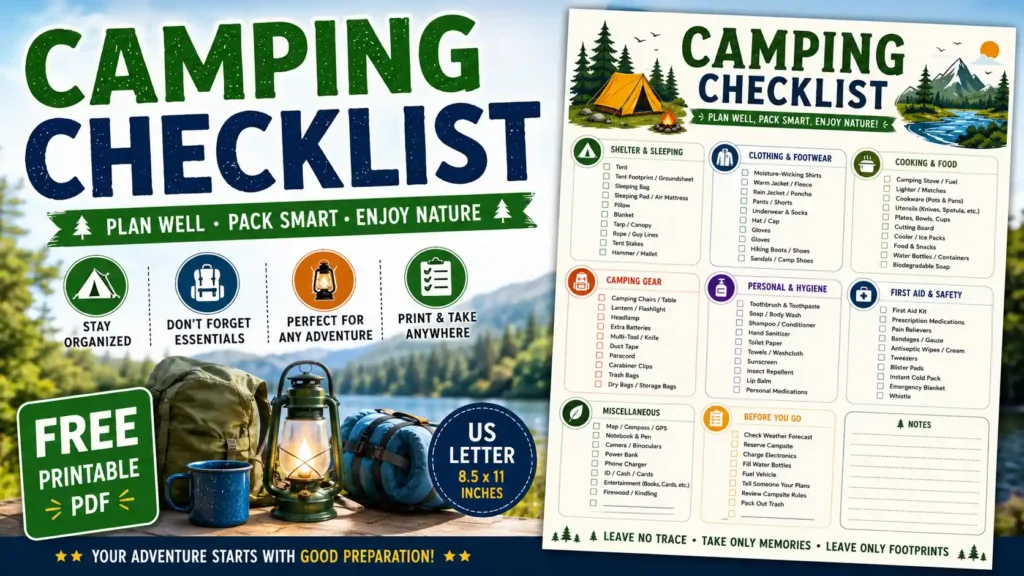
Download Your Free Camping Checklist Printable
Download Your Free Camping Checklist Printable
Plan your next outdoor adventure with this free Camping Checklist Printable PDF. Stay organized with essential camping gear, clothing, cooking supplies, safety items, personal care, and packing reminders. Perfect for family camping, hiking trips, RV adventures, and weekend getaways.
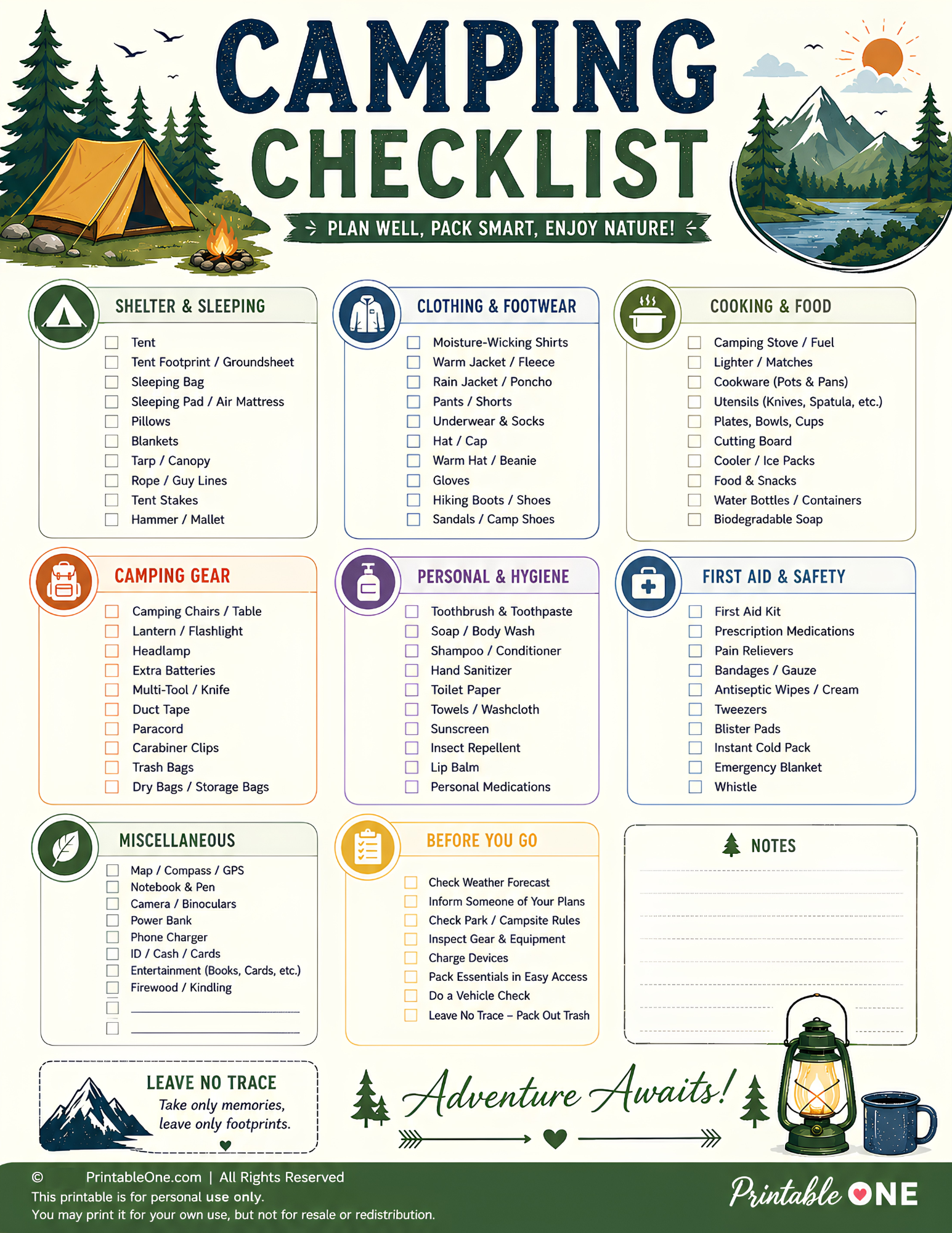
Note: This high-resolution, print-ready document is 100% free for personal use. Print as many copies as you need to stay organized, pack confidently, and enjoy the great outdoors with zero stress!
What Is a Camping Checklist?
A camping checklist printable is an all-inclusive, visually structured organizational master ledger designed to help you prepare, categorize, and cross-reference all of your outdoor equipment before you leave civilization behind. Think of it as a highly specialized camping planner printable that acts as a secure operational barrier against forgetfulness. Rather than tossing random gear into your trunk and hoping for the best, this physical document forces you to systematically assess your loadout across distinct structural categories—such as shelter, camp kitchen, safety, and personal care.
Consistently utilizing a camping essentials checklist is one of the most important habits you can build as an outdoor enthusiast, regardless of your experience level. Beginners benefit immensely from having a structural guide that explicitly outlines overlooked necessities, preventing the common mistake of showing up to a remote campsite without a reliable light source or proper insulation. For seasoned woodsmen, a dedicated camping packing checklist removes the mental fatigue of repetitive prep work. It allows you to audit your gear storage boxes rapidly, track consumable items like stove fuel or batteries, and ensure your pack weight remains perfectly balanced.
Furthermore, a physical camping trip checklist introduces invaluable efficiency to your departure window. Last-minute packing runs are notoriously chaotic; you are often fighting traffic, racing against the setting sun, and trying to remember if you packed the pocket knife or the first aid kit. Ticking off physical check boxes creates an objective framework where everyone in the family can actively participate. It transforms a messy, disorganized process into an efficient routine, letting you maximize your packing speed so you can hit the road early and arrive at your destination with daylight to spare.
What’s Included?
This comprehensive camping checklist template features an expansive, multi-category layout designed to ensure no element of your wilderness survival or campsite comfort is overlooked:
Shelter & Sleeping
Your camp shelter is your primary defense against the elements, changing temperatures, and midnight moisture. This section guarantees a secure, comfortable night’s rest:
- Tent: Your main mobile home; always double-check the zippers and poles before departure.
- Tent Footprint / Ground Tarp: A vital layer placed underneath your tent to block sharp rocks, twigs, and rising ground moisture.
- Sleeping Bag: Rated accurately for the lowest expected seasonal temperatures of your destination.
- Sleeping Pad: Provides essential thermal insulation between your body and the cold ground, protecting your body heat.
- Air Mattress: An excellent addition for car camping setups or structural back support on rough terrain.
- Pillow: Compact travel or compressible camp pillows to maximize your sleep quality.
- Blanket: Extra wool or fleece layers to manage unpredictable midnight temperature drops.
- Tarp: A highly versatile shelter piece to suspend over your picnic table or tent structure during heavy rain downpours.
- Stakes: Essential anchor pins; always carry a few extra to secure your rainfly against high winds.
- Rope / Guylines: Heavy-duty paracord to tie down tarps, hang bear bags, or set up emergency clotheslines.
Clothing & Footwear
Outdoor apparel relies completely on functional layering. This section tracks your wardrobe to protect you from morning chills, mid-day heat, and sudden rain:
- Shirts: Moisture-wicking base layers; avoid standard cotton, which traps sweat and chills your body.
- Pants / Shorts: Durable, quick-drying trail pants that shield your legs from thick brush and insect bites.
- Jacket: A warm insulating layer, such as a packable fleece or down jacket, for crisp mornings.
- Rain Gear: A dedicated waterproof rain jacket and pants to keep you dry during sudden storms.
- Socks: High-quality wool or synthetic hiking socks to prevent blisters and manage internal moisture.
- Underwear: Comfortable, breathable layers designed for long active movements along the trail.
- Hiking Boots / Shoes: Sturdy, broken-in footwear providing excellent ankle support and reliable traction.
- Sandals / Camp Shoes: Lightweight slip-ons to give your feet a break after a long day of hiking.
- Hat: A wide-brimmed sun hat for day hikes, or a warm beanie for cold nights around the campfire.
- Gloves: Insulated or work gloves to protect your hands while gathering firewood or managing hot stoves.
Cooking & Food
A well-fed camper is a happy camper. This segment organizes your mobile kitchen into a highly efficient culinary station:
- Camping Stove: A reliable single or dual-burner cooking system to prepare hot meals quickly.
- Fuel: Extra propane, butane, or liquid fuel canisters matching your specific stove requirements.
- Lighter / Matches: Waterproof matches or multiple lighters stored securely in dry bags.
- Cookware: Space-saving, nesting camp pots, skillets, and durable lids.
- Plates & Bowls: Lightweight, shatterproof enamel or BPA-free plastic dinnerware.
- Cups / Mugs: Insulated travel mugs to keep your morning coffee or evening tea piping hot.
- Utensils: Heavy-duty forks, knives, spoons, or multi-functional sporks, along with cooking spatulas.
- Cooler: High-insulation ice chest packed strategically to preserve perishable meats, dairy, and cold drinks.
- Water Bottles / Hydration Bladders: Rugged containers to ensure you maintain constant access to clean water.
- Snacks: High-calorie, shelf-stable energy fuel like trail mix, jerky, protein bars, and dried fruit.
- Food Storage: Airtight bins or heavy-duty dry sacks to protect your food supply from local wildlife.
Camping Gear
The foundational toolset required to operate a functional, highly organized, and brightly illuminated wilderness camp:
- Flashlight: A rugged, high-lumen hand lamp to inspect camp borders or navigate dark trails.
- Lantern: An omnidirectional ambient light source to illuminate your central picnic table or tent interior.
- Headlamp: An invaluable hands-on tool that keeps your hands completely free while cooking dinner or pitching a tent after dark.
- Batteries / Charging Cables: Fresh backup cells matching your lights, along with standard device cords.
- Camping Chairs: Foldable, comfortable outdoor seats to relax around the fire pit.
- Folding Table: A convenient extra surface for food preparation, card games, or gear organization.
- Pocket Knife / Multi-Tool: A critical survival utility asset for slicing rope, opening cans, or executing quick gear repairs.
- Duct Tape: The ultimate emergency fix for torn tent fabrics, leaking tarps, or cracked plastic bins.
- Paracord: High-strength utility line for custom gear rigs, clotheslines, or securing loose vehicle gear.
- Trash Bags: Heavy-duty clean-up sacks to pack out all waste and follow proper environmental rules.
Personal Care
Maintaining comfort and hygiene in the backcountry prevents irritation, illness, and unwanted campsite odors:
- Toothbrush & Toothpaste: Compact oral care kits; consider biodegradable paste variations for remote sites.
- Soap / Shampoo: Environmentally safe, camp-approved soap lines to rinse off dirt without harming local waterways.
- Towel: Microfiber, ultra-absorbent, fast-drying travel towels that pack down tightly.
- Toilet Paper: Stored in a secure, waterproof zip-top bag alongside dedicated waste disposal sheets.
- Sunscreen: High-SPF broad-spectrum block to shield your skin during long daytime trail exposures.
- Bug Spray / Insect Repellent: EPA-approved formulations to ward off ticks, mosquitoes, and biting flies.
- Lip Balm: Medicated or SPF-infused balm to protect against windburn and chapping.
First Aid & Safety
Safety is your non-negotiable priority when stepping away from immediate medical access. Never remove these items from your loadout:
- First Aid Kit: A fully stocked, water-secure medical kit containing varied specialized supplies.
- Medications: Comprehensive supplies of personal prescriptions, along with standard over-the-counter pain relievers and allergy pills.
- Bandages: Varied shapes and sizes, including specialized blister moleskin and sterile gauze pads.
- Antiseptic Wipes: Specialized sanitizing prep pads to thoroughly clean cuts and scrapes before bandaging.
- Tweezers: Essential for removing painful splinters, glass shards, or deeply embedded trail ticks safely.
- Emergency Blanket: A compact, heat-reflective space blanket to combat unexpected shock or hypothermia.
- Whistle: A loud, high-pitch signaling device to call for help if you become separated from your group on the trail.
Miscellaneous Items
The secondary comfort and travel tools that wrap up a well-rounded packing plan:
- Phone Charger & Power Bank: Heavy-duty external battery banks to keep your communications alive in remote zones.
- Camera: To capture stunning landscape vistas and candid family memories around the campfire.
- Notebook & Pen: Perfect for field sketching, journaling, or tracking local wildlife trails.
- Map & Compass: Physical navigation backups that work flawlessly even when digital GPS signals completely cut out.
- Cash & ID: Kept secure in a waterproof sleeve for park gate entries, firewood bundles, or emergency fuel stops.
- Books & Playing Cards: Timeless, low-tech entertainment options for rainy afternoons inside the tent.
Before You Go: The Pre-Trip Checklist
A successful trip relies heavily on what you do before turning the ignition key. Complete these seven essential steps before leaving your driveway:
- Check Weather Forecasts: Monitor your target destination’s exact radar metrics up to the hour of departure to catch any incoming severe storms or temperature drops.
- Reserve Campsite / Check Permits: Verify your digital reservation confirmations and print out any hard-copy access permits required by park rangers.
- Charge All Electronics: Ensure your phones, headlamps, power banks, and GPS systems are sitting at 100% battery capacity.
- Fill Water Bottles / Jugs: Pack explicit clean reserves or verify that the campsite’s drinking water spigots are fully active for the season.
- Fuel Vehicle & Stoves: Start your trip with a completely full gas tank and check that all camp fuel canisters are topped off.
- Tell Someone Your Plans: Leave a detailed trip plan—including your exact destination, campsite number, trail route, and expected return time—with a trusted friend or family member at home.
- Review Campsite Rules: Check local guidelines regarding active fire bans, pet restrictions, firewood transportation regulations, and check-in times.
How to Use This Printable
To maximize the organization of your camping supplies list, adopt this systematic five-step framework:
[Choose Destination] ➔ [Review Categories] ➔ [Check Off as You Pack] ➔ [Add Custom Notes] ➔ [Final Double-Check]- Step 1: Choose Your Camping Destination: Determine your exact environment, terrain, and campsite amenities so you can tailor your gear precisely to the location’s needs.
- Step 2: Review Every Category: Read down your printable list to visualize your setup and quickly locate your packed gear bins inside your garage or storage space.
- Step 3: Check Each Item As You Pack: Physically mark off every piece of equipment only when it is officially placed inside your backpack, gear duffel, or vehicle trunk.
- Step 4: Write Additional Items in the Notes Section: Use the flexible bottom canvas to list niche personal gear, custom grocery lists, emergency park contact numbers, or specific location reminders.
- Step 5: Double-Check Everything Before Leaving: Perform a quick final sweep of your sheet right before hitting the road to ensure no critical checkbox was accidentally left blank.
Benefits of Using a Camping Checklist Printable
Transitioning from disorganized, spontaneous packing to a structured physical ledger provides powerful strategic benefits for your outdoor lifestyle.
Stay Organized
A physical sheet acts as a central hub for your entire trip preparation. It keeps all your crucial information, gear tallies, and supply counts neatly arranged on a single page, eliminating the stress of managing scattered sticky notes or messy digital memos.
Save Packing Time
Instead of wandering aimlessly around your garage trying to figure out what to grab next, this checklist gives you a clear path. It streamlines your movements, allowing you to pull your gear systematically and cut your total packing time in half.
Avoid Forgetting Important Items
There is no worse feeling than arriving at a remote campsite at sunset only to realize you left your matches, flashlight, or tent poles sitting on your garage floor. Checking off items physically provides a reliable safeguard, ensuring you leave the driveway with every single essential intact.
Great for Families
Managing a family camping checklist ensures that everyone stays completely aligned. You can easily delegate packing tasks to your spouse or kids—such as assigning the clothing or gear categories—making sure no one assumes someone else packed a critical item.
Perfect for Beginners
If you are preparing for your very first night under the stars, the sheer volume of specialized gear can feel completely overwhelming. A structured list simplifies the entry barrier, providing a clear roadmap that ensures a safe, comfortable, and highly successful introduction to the great outdoors.
Reusable
Save the digital master file onto your computer or device and print out a fresh copy for every new adventure. This allows you to build a highly consistent packing routine that stays organized season after season, year after year.
Camping Essentials Everyone Should Pack
No matter if you are embarking on a rugged hiking camping checklist adventure or setting up a comfortable RV camping checklist layout, these fifteen foundational tools form the mandatory core of every safe outdoor loadout:
- Tent: Your primary shelter protection against cold wind, ambient moisture, and trail insects.
- Sleeping Bag: Essential insulation designed to keep your core body temperature safe and warm overnight.
- Pillow: Provides crucial neck support to ensure you wake up well-rested and ready for long trail hikes.
- Water Bottle: A durable container to maintain clean hydration and prevent fatigue during outdoor activities.
- Flashlight / Headlamp: Critical illumination tools to maintain visibility and safety around camp after dark.
- First Aid Kit: Your essential medical kit to treat minor trail scrapes, blisters, or insect stings immediately.
- Cooking Stove: A reliable heat source to prepare hot meals and boil clean drinking water efficiently.
- Matches / Lighter: The fundamental tool required to ignite your cooking stove or build a warm campfire.
- Cooler: Essential for keeping perishable food supplies fresh, safe, and protected from spoiling.
- Extra Clothes: Layered clothing options to handle unexpected shifts in weather or sudden temperature drops.
- Rain Jacket: Your primary shield against sudden downpours, keeping your inner layers dry and warm.
- Camp Chair: Provides comfortable seating to relax, recuperate, and enjoy your time around the fire pit.
- Sunscreen: Vital skin protection against intense UV rays during long afternoons on open trails.
- Insect Repellent: A strong barrier against mosquitoes, ticks, and flies, protecting you from irritation and bugs.
- Phone Charger / Power Bank: Keeps your communication devices fully powered for maps, photos, or emergency calls.
Expert Tips for an Unforgettable Camping Experience
- Arrive Well Before Sunset: Give yourself a comfortable two-to-three-hour window of daylight to inspect your site, pitch your tent perfectly, arrange your kitchen, and gather firewood without having to struggle with a headlamp in the dark.
- Pack Light But Smart: Focus heavily on multi-functional gear that maximizes utility while keeping your pack weight low. Group your smaller loose items inside transparent plastic bins to keep your vehicle cleanly organized.
- Store Food Safely: Protect your campsite from local wildlife by storing all food, scented toiletries, and trash securely inside hard-sided vehicle trunks, approved campground bear lockers, or heavy-duty bear canisters hung out of reach.
- Bring Extra Water Reserves: Always carry more water than you estimate you’ll need. Bring a minimum of one gallon of fresh water per person per day for drinking, cooking, and basic cleaning tasks, or pack a high-grade filtration pump as a backup.
- Wear Layered Clothing: Dress in layers so you can easily adapt to changing outdoor conditions. Combine a moisture-wicking base layer with a warm insulating middle piece and a windproof, waterproof outer jacket to stay perfectly comfortable all day.
- Respect Local Wildlife: Observe forest animals from a safe distance and never feed them. Keep your campsite clean and clear of food scraps to avoid drawing animals into your sleeping area.
- Leave Your Site Cleaner Than You Found It: Inspect your fire pit, picnic tables, and tent spaces for tiny pieces of trash, gear scraps, or spilled food before checking out, ensuring the site stays pristine for the next camper.
- Follow Leave No Trace Principles: Protect our public lands by traveling strictly on established trails, camping only on designated sites, disposing of all waste correctly, and leaving natural objects exactly as you found them.
- Always Carry a First Aid Kit: Keep your medical supplies easily accessible at the top of your pack or in your vehicle’s glove compartment, ensuring you can reach them instantly during an emergency.
Common Packing Mistakes to Avoid
- Forgetting Tent Stakes: Showing up to a beautiful campsite only to realize you left your stakes at home makes it incredibly difficult to secure your tent or stretch out your rainfly during high winds.
- Not Bringing Enough Clean Water: Relying purely on the assumption that a natural stream or campground pump will be active can leave you stranded without hydration. Always carry dedicated backup reserves.
- Packing Too Much Unused Clothing: Bringing along your entire wardrobe “just in case” creates unnecessary clutter in your tent and adds heavy, exhausting weight to your backpack. Stick to a smart, functional layering plan.
- Leaving Behind Fresh Batteries: Packing high-quality flashlights and headlamps but forgetting to verify their charge or bring backup cells can leave you completely in the dark if your lights run out of power.
- Not Checking the Local Weather Forecast: Assuming the weather at your campsite will match your hometown can leave you completely unprepared for sudden mountain storms, drops in temperature, or heavy wind.
- Ignoring Campground Rules: Disregarding active local fire bans, ignoring quiet hours, or bringing unapproved pets can result in costly ranger fines and disrupt the peace of the campground.
- Forgetting Bug Spray: Venturing deep into the woods during peak summer without a reliable insect barrier can turn your relaxing trip into an incredibly uncomfortable battle with mosquitoes and ticks.
- Not Packing a Reliable Flashlight: Trying to set up camp, cook dinner, or navigate dark paths using nothing but a dim smartphone screen will quickly drain your phone’s battery and create a significant safety hazard.
Packing Environments: Tent vs. RV Camping
Understanding the distinct equipment needs of different camping styles allows you to tailor your gear list perfectly for maximum comfort and safety.
| Feature | Tent Camping Focus | RV Camping Focus |
| Primary Shelter | Lightweight, weather-resistant nylon structures, ground tarps, and stakes. | Solid vehicle structures requiring leveling blocks, wheel chocks, and hookups. |
| Sleeping Setup | High-density foam mats, compact sleeping pads, and cold-rated sleeping bags. | Standard interior mattresses, standard home bedding sheets, and standard pillows. |
| Power & Utilities | Relying entirely on battery power banks, solar panels, and fuel canisters. | Direct access to shore power, onboard generators, and fresh water storage tanks. |
| Kitchen Operations | Compact single-burner backpacking stoves, nesting pots, and ice coolers. | Full onboard kitchen appliances, microwave ovens, and integrated refrigerators. |
Who Should Use This Printable?
This highly versatile camping gear checklist is designed to add immense organization, structure, and peace of mind to outdoor enthusiasts across all styles of travel:
- Families: An excellent tool to ensure that every family member’s clothing, personal gear, and favorite snacks are packed safely, keeping group trips completely stress-free.
- Couples: Provides a clear, organized framework to coordinate shared packing responsibilities, ensuring you don’t accidentally bring duplicate camp stoves or leave behind the tent poles.
- Solo Campers: Essential for maintaining a rigorous, self-reliant audit of your gear, making sure you carry every safety and survival tool needed when traveling alone.
- Hikers & Backpackers: A perfect foundational list to review before loading up your pack, helping you trim away excess weight while keeping your core survival tools intact.
- Scouts & Youth Groups: An invaluable educational resource to help young campers learn the fundamentals of outdoor preparation and personal accountability.
- RV Travelers: Great for reviewing your core outdoor camp items—like folding chairs, fire starters, and cooking tools—before parking your rig.
- Adventure Travelers: A reliable master guide for packers heading out on long road trips, cross-country overlanding journeys, or multi-day national park tours.
Frequently Asked Questions
Is this Camping Checklist Printable free?
Yes. This high-resolution, print-ready PDF document is 100% free to download, print, and use for all your personal camping and outdoor planning needs.
What size is the printable?
The worksheet is professionally formatted to the standard US Letter size (8.5 × 11 inches), ensuring perfect, hassle-free printing on all home and office machines.
Can I print multiple copies?
Absolutely! Feel free to print out a fresh copy for every new trip you plan, or print separate pages for different members of your family to keep everyone’s gear tracking beautifully organized.
Is it suitable for family camping?
Yes, it is designed to be highly versatile. The comprehensive categories cover everything from large multi-person shelters and heavy-duty camp kitchens to personal care items, making it a perfect fit for group trips.
Can I add my own items?
Definitely. The built-in notes and reminders section at the bottom gives you a flexible, open space to customize the list with niche gear, specific grocery items, or unique location needs.
Is this useful for RV camping?
Yes. While it includes elements designed for tent camping, the vast majority of categories—including cooking gear, safety tools, clothing, and personal care—apply perfectly to RV travel.
Can I use it alongside other PrintableOne planners?
Absolutely. This outdoor checklist integrates seamlessly with our travel packing sheets, weekly checklists, and meal planners, helping you build a comprehensive, highly organized home management system.
Related Printables
To build an all-encompassing, highly effective travel and home organization binder, check out these excellent complementary printables:
- Travel Packing Checklist Printable
- Vacation Planner Printable
- Road Trip Planner Printable
- Emergency Contact List Printable
- Grocery Shopping List Printable
- Meal Planner Printable
- First Aid Checklist Printable
- Hiking Checklist Printable
- Daily Planner Printable
- Weekend Planner Printable
Final Thoughts
A well-planned camping trip starts with a reliable, structured packing plan. By using this camping checklist printable, you stop managing your gear reactively and start packing with total confidence. You transition away from last-minute stress and move into a position of absolute preparation and peace of mind. Review your categories carefully, mark off each essential tool as it goes into your vehicle, use the notes section to customize your trip details, and double-check your list before leaving the driveway. Download your free printable today, stick to the process, and make every outdoor adventure easier, safer, and infinitely more enjoyable.