
Taking control of your personal finances can often feel like an uphill battle, especially if traditional budgeting methods leave you feeling uninspired. If you have struggled to stick to a savings plan in the past, you are not alone. Maintaining consistency is one of the biggest hurdles in building wealth. That is exactly why gamified financial routines and structured money management systems have taken the world by storm, and none have made a more immediate impact on your day-to-day spending alignment than a dedicated weekly budget planner printable.
Managing your money is much easier when you budget one week at a time. This premium weekly budget printable helps you organize your income, plan recurring expenses, track savings, monitor debt payments, and review your financial progress every seven days. Missing or ignoring your day-to-day transactions between pay periods can lead to unmonitored lifestyle leaks that quietly derail your financial freedom. By downloading our free weekly budget worksheet, you transform a tedious chore into an organized, visual routine. This intuitive dashboard helps you consolidate your short-term cash flow, tracking metrics, and spending categories in one convenient place, giving you total clarity over your paper money before it vanishes from your checking account.
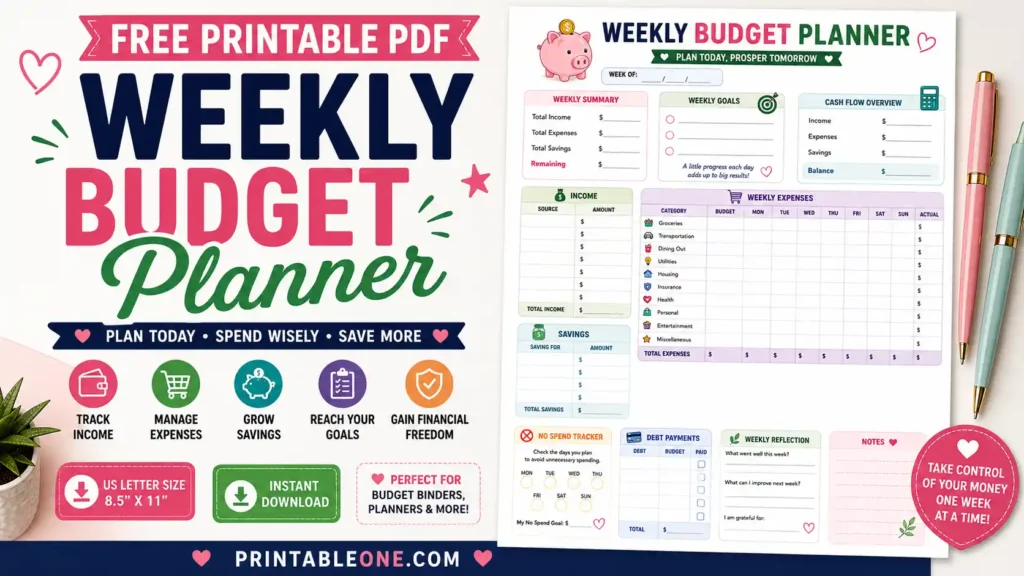
Whether you’re working toward saving more, reducing unnecessary spending, or simply staying organized, this printable weekly budget provides a simple way to stay on top of your finances. Designed in standard US Letter size (8.5 × 11 inches), it is perfect for your specialized budget binder printable, physical planners, and home finance organization. Our high-quality layout is available for instant download, completely free of charge, and ready to print right from your home computer.
Whether you want a physical tracking sheet for your desk or a versatile weekly financial planner for your tablet, this tool provides the exact structural layout you need to build healthier money habits. Print unlimited copies and use it every single week to keep your finances perfectly balanced.
Download Your Free Weekly Budget Planner Printable
Ready to eliminate spending anxiety and establish absolute organization over your short-term cash flow? Choose your preferred file format below for an instant download.
Print File Details
- File Format: High-resolution, ink-friendly PDF & PNG options
- Dimensions: Standard US Letter Size (8.5 × 11 inches)
- Cost: 100% Free download
- Printability: Optimized for crisp home printing
Download Your Free Weekly Budget Planner Printable
Stay in control of your weekly finances with this free Weekly Budget Planner Printable PDF. Track your income, expenses, savings, debt payments, weekly goals, and spending habits in one easy-to-use planner designed to help you budget smarter every week.
What Is a Weekly Budget Planner?
A weekly budget planner is a specialized financial log sheet designed to capture, display, and verify your earnings and allocations over a strict seven-day window. Rather than trying to map out a massive 30-day calendar all at once, the philosophy of a weekly money planner is to narrow your focus to your immediate everyday choices. It bridges the gap between your real-time bank deposits and your actual spending habits, ensuring that no single dollar slips through your fingers undetected.
Why Weekly Planning Beats Monthly Budgeting
For many households, traditional monthly budgets fail because a 30-day timeline is simply too long to predict accurately. It is incredibly easy to look at a healthy checking account balance on the 5th of the month, overspend on weekend entertainment, and find yourself completely broke by the 15th.
A weekly planner printable completely eliminates this issue by breaking your month down into four digestible micro-budgets. This structure acts as a fast-acting defense system against lifestyle inflation. When you budget one week at a time, you gain tight control over your variable daily expenses. Reviewing your finances every seven days ensures that if you happen to overspend on a Tuesday, you can spot the leak instantly and adjust your habits for the remaining days of the week, rather than waiting until the end of the month when the damage is already done.
What’s Included in This Free Tracker?
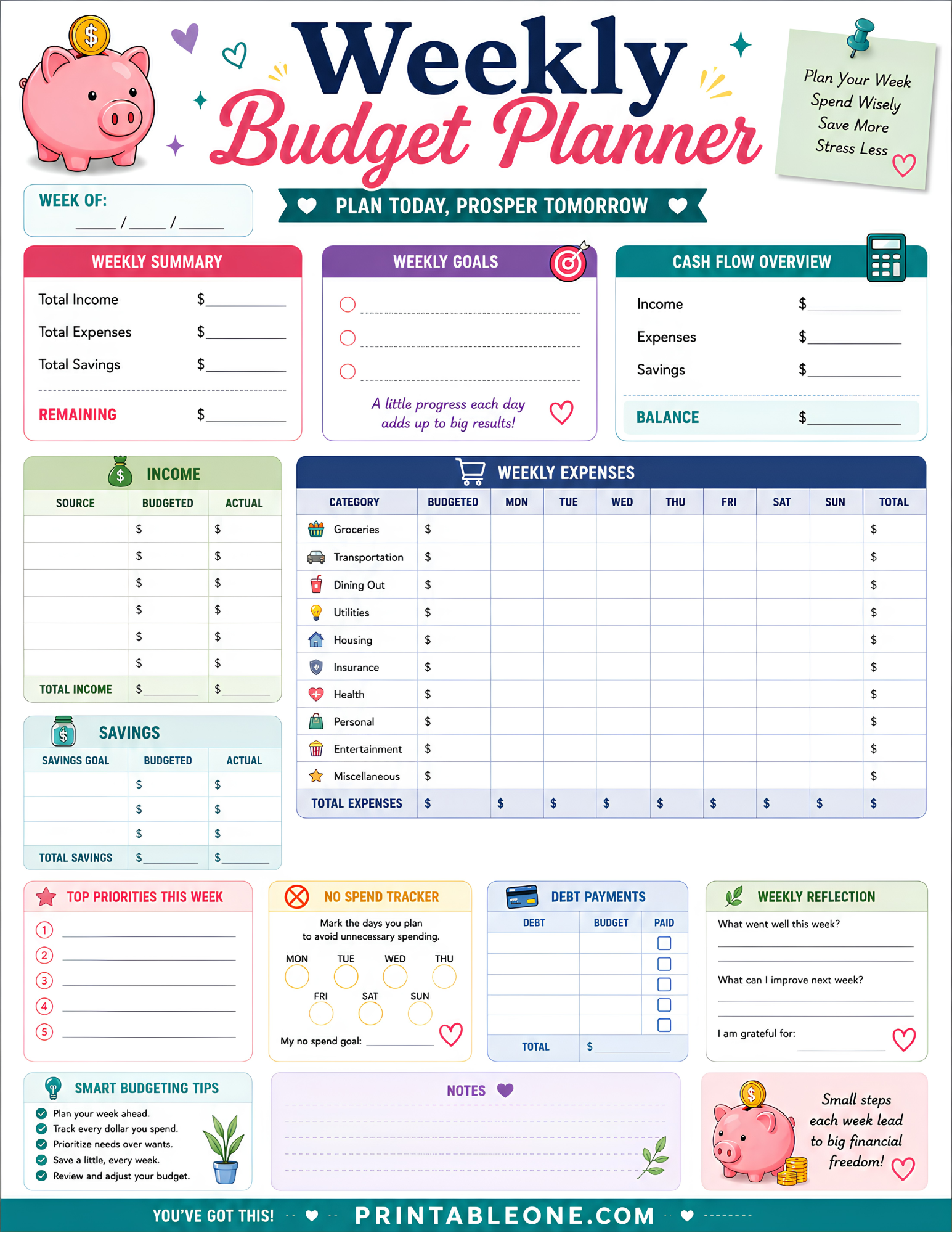
We engineered this weekly budgeting worksheet framework to be clean, intuitive, and highly functional. Your instant download package includes everything you need to document your seven-day metrics on a single page:
- Week Date Prompts: Clear fields at the top of the sheet to log the exact start and end dates of your current seven-day cycle.
- Weekly Income Tracker: Dedicated rows to record your primary base salary alongside freelance client checks, side hustle cash, cashback rewards, or bonuses.
- Weekly Expense Tracker Module: A high-visibility matrix to log expected fixed costs and variable discretionary purchases due within this specific seven-day window.
- Weekly Savings Field: A dedicated allocation module to track funds directed toward your emergency fund, sinking funds, or a weekly savings planner.
- Cash Flow Summary Calculators: Integrated, zero-based calculation blocks at the base of the page to compute your Total Income minus Total Expenses.
- Weekly Goals Section: A prominent, bold field to define your top financial milestones for the current cycle to maintain cognitive focus.
- No-Spend Tracker Grid: A mini tactile calendar component to track and cross off days where you successfully avoid all non-essential retail spending.
- Debt Payment Tracker: Specific rows to document extra principal paydowns directed toward credit card balances or personal loans.
- Weekly Reflection Block: A built-in behavioral review section to jot down what went well, what spending triggers occurred, and how to improve.
- Notes Section: Clean, lined space to sketch out meal plans, grocery shopping lists, or tracking updates.
- US Letter Format: Precision-engineered margins tailored specifically for standard 8.5 × 11-inch printer paper.
How to Use This Weekly Budget Planner Template
Configuring your free weekly finance planner takes less than ten minutes every weekend. Follow this simple eight-step roadmap to maximize your cash management success.
[Write Week Dates] ➔ [Record Weekly Income] ➔ [List Expected Expenses] ➔ [Set Savings Goals] ➔ [Track Daily Spending] ➔ [Record Debt Payments] ➔ [Tally Weekly Reflection] ➔ [Prepare Next Week]Step 1 – Write the Week You’re Planning
Start by filling in the exact start and end dates for the upcoming seven-day block at the top of your page. Treating this sheet as a historical record helps you build an organized archive inside your financial planner binder over time.
Step 2 – Record All Incoming Income
Populate your income tracker with every single incoming revenue stream expected to hit your account during these seven days. Record your standard base salary, but don’t forget to incorporate any side hustle checks, freelance invoicing, cashback balances, or unexpected bonuses.
Step 3 – List Expected Expenses
Look at your calendar and list all fixed bills and variable purchases occurring within this specific week. Allocate clear, realistic ceilings for necessary survival categories like groceries, transportation fuel, dining out at restaurants, utility bills, and clothing shopping.
Step 4 – Set Your Weekly Savings Goal
Prioritize your future self by defining your asset allocations in the savings module. Dedicate a specific, manageable portion of your weekly cash flow to be transferred straight into a high-yield savings account or an emergency cushion.
Step 5 – Track Daily Spending Consistently
Every single evening, open up your printed weekly expense tracker sheet. Write down your daily transaction amounts, update your running totals, and log your successful no-spend days on the visual grid component.
Step 6 – Record Debt Payments
If you are actively executing a debt payoff strategy, list your targeted debt obligations for the seven-day cycle. Record your required credit card minimums, student loan allocations, or car loan installments.
Step 7 – Review Your Weekly Progress
At the close of Day 7, run your final numbers in the summary module. Complete your handwritten Weekly Reflection block to audit your spending behavior, document your wins, and identify what specific triggers caused any overspending.
Step 8 – Prepare Your Budget for Next Week
Take a fresh copy of our weekly spending tracker, review the data from the week you just finished, and map out your allocations for the upcoming seven days with increased accuracy and confidence.
The Compounding Benefits of Weekly Budgeting
Why should you transition from a broad monthly budget to a tight, high-frequency weekly system? Reviewing your cash flow every seven days yields massive structural changes in your consumer behavior.
- Stay in Complete Control of Spending: Breaking your finances into tight, weekly intervals prevents cash from sitting unassigned in your checking account, where it is easily drained by impulse buys.
- Catch and Correct Overspending Early: If you experience a budget leak on a Tuesday, you don’t have to throw your hands up and abandon the entire month. You can spot the error instantly and adjust your spending over the remaining five days to stay perfectly balanced.
- Save More Money Consistently: Depositing small, manageable amounts of cash into your savings goals every single week builds powerful muscle memory, causing your wealth to grow significantly faster than sporadic monthly savings.
- Drastically Reduce Financial Stress: Anxiety loves uncertainty. Knowing exactly how your money must behave for the next seven days is highly approachable, replacing financial dread with immediate peace of mind.
- Build Healthier Money Habits: Frequently engaging with a physical printable finance planner keeps your financial goals fresh and top-of-mind, helping you make highly intentional choices at the cash register.
- Reach Long-Term Goals Faster: Every minor budget leak you catch and eliminate turns into hard cash that can be immediately launched at your debt principal paydowns or investment targets.
What You Can Track
Our open-ended weekly budget template is entirely flexible, allowing you to monitor and organize every tier of your short-term personal and household expenses:
- Incoming Revenue: Day-job salaries, tips, side hustle cash, freelance payouts, online marketplace sales, and dividend cash injections.
- Weekly Bills: Streaming subscriptions, weekly gym dues, childcare costs, or prorated monthly utility bills.
- Groceries: Whole foods, baseline pantry ingredients, daily household toiletries, and cleaning staples.
- Transportation: Vehicle fuel, public transit passes, highway tolls, and commuter parking fees.
- Dining & Cafe Trips: Morning espresso runs, drive-thru breakfasts, workplace lunches, and weekend restaurant dinners.
- Entertainment: Movie tickets, digital video rentals, sporting events, and hobby expenses.
- Shopping Allowance: Casual retail spending, fashion apparel, home decor items, and impulse purchases.
- Savings Contributions: Emergency funds, sinking funds, travel goals, and investment account transfers.
- Debt Payments: Credit card principal reductions, student loan payments, auto loans, and personal balances.
- Miscellaneous Overhead: Emergency cash buffers, cash envelopes, or random small everyday purchases.
Pro Tips for Successful Weekly Budgeting
Setting up your weekly budget worksheet is a fantastic first step, but maximizing your cash flow efficiency requires active optimization strategies in your daily routine.
1. Review Your Budget Every Sunday
Establish a non-negotiable financial date with yourself every single Sunday morning. Pull up your mobile banking applications, review your receipts, log your income, and map out your upcoming weekly sheet over a quiet cup of coffee. Starting your week with a clear visual plan prevents impulse spending before your Monday routine even begins.
2. Track Every Purchase in Real-Time
Do not wait until the weekend to log seven days of transactions all at once. Keep your printed tracker sheet or your budget binder in a high-traffic area—like your home office desk or kitchen counter. Spend two minutes updating your ledger lines every single evening to ensure your records remain perfectly accurate.
3. Plan Your Household Meals in Advance
The absolute number one point of failure for short-term budgets is dinner time after an exhausting workday. If your fridge is empty and your energy is low, ordering expensive restaurant delivery is incredibly tempting. Prevent this by planning your weekly meals every Sunday, grocery shopping with a strict list, and prepping simple meals ahead of time.
4. Use Physical Cash for Discretionary Spending
If you find yourself continuously overspending on plastic cards in categories like dining out or retail shopping, leave your credit cards at home. Calculate your specific weekly allowance for those categories, withdraw that exact amount in physical cash, and place it into labeled cash envelopes. Once the cash is gone, your spending stops completely.
5. Save Money Before Spending
Never wait to see what cash happens to be left over in your checking account on Day 7 to fund your savings goals. The exact morning you receive your weekly or biweekly income, execute your automated savings transfers immediately. Treating your savings allocation like a mandatory bill guarantees your wealth grows predictably.
Common Budgeting Mistakes to Side-Step
To protect your hard work and ensure you reach the finish line seamlessly, watch out for these common psychological and behavioral traps:
- Ignoring Small Everyday Purchases: Assuming minor convenience store stops or app updates don’t matter will quickly break your calculations. Every dollar counts when building a precise financial record.
- Skipping Weekly Reviews: Allowing yourself to miss your regular budget check-ins breaks your positive habit loop, making it incredibly easy to drift back into old patterns of unmonitored spending.
- Forgetting Irregular, Non-Monthly Expenses: Leaving out irregular annual fees, quarterly utility bills, or holiday gift shopping will throw your weekly balance off. Save for these bills gradually using sinking fund categories.
- Completely Ignoring Your Savings Goals: Budgeting solely to pay bills leads to financial fatigue. Always allocate a portion of your weekly cash flow toward a clear purpose to keep your motivation high.
- Overspending Heavily on Weekends: Maintaining perfect discipline from Monday through Thursday only to blow your entire budget on Friday night retail runs or expensive restaurant dinners is a major trap. Pace your entertainment funds carefully.
- Giving Up Entirely After One Bad Week: Life can happen, and unexpected emergency expenses pop up. If you experience a bad week where you heavily overspend, do not throw your tracker away. Forgive the deviation, complete your weekly reflection, and start fresh the following Sunday.
Weekly vs. Monthly Budgets
Selecting the ideal money management timeline depends heavily on your lifestyle, career setup, and personal spending triggers. Use this comprehensive comparison table to balance your strategy:
| Operational Feature | Strategic Weekly Budget Planner | Comprehensive Monthly Budget |
| Ease of Expense Management | Extremely Simple (Short, highly predictable window) | Moderate (Requires navigating a broad 30-day view) |
| Pacing and Adjustments | Rapid & Instant (Corrections happen within days) | Slower (Overspending early ruins the later weeks) |
| Income Structures | Perfect for variable cash flow, tips, and freelancers | Ideal for highly static, fixed salary workers |
| Discretionary Control | Keeps daily impulse spending under tight control | Easy to lose track of variable cash limits |
| Long-Term Utility | Focuses heavily on active behavioral changes | Best for tracking macro trends and long-term investments |
| Review Frequency | High (Requires ten minutes every single weekend) | Low (Requires a single session at the end of the month) |
Who Should Use This Printable Tracking Sheet?
Our open-ended, highly flexible formatting is engineered to deliver immediate value to individuals across a wide variety of income structures and life stages:
- College Students: Ideal for learning critical independent financial literacy, managing limited weekly allowances, and tracking textbook costs.
- Busy Families: Great for organizing multi-person household grocery bills, tracking childcare costs, and managing weekend family entertainment spending.
- Freelancers & Tip Earners: Perfectly designed to track fluctuating client payouts, handle irregular weekly revenues, and structure variable incomes cleanly.
- Weekly & Biweekly Paid Employees: Aligns perfectly with high-frequency corporate payroll cycles, allowing you to budget your cash the exact day it hits your account.
- Budget Binder Users: Meticulously designed with optimized blank margins on the left border specifically so you can punch holes and clip it securely into any standard three-ring organizer binder.
Frequently Asked Questions
Is this Weekly Budget Planner Printable completely free?
Yes! Our premium tracker layout is 100% free for your personal money management. You can instantly download the file in high-resolution PDF or PNG format and print as many clean copies as you need.
What paper size is the downloadable file formatted for?
The download is precisely formatted to standard US Letter size (8.5 × 11 inches). It features optimized margins designed to print flawlessly on standard home copy paper without requiring any complex sizing tweaks or margin cropping.
Can I print unlimited copies of this budget sheet?
Absolutely. We highly recommend printing out a fresh sheet at the close of every week so you can establish a clean, highly organized physical archive of your transactional history inside your household finance binder.
Can I use this printable template digitally?
Yes. If you prefer a completely paperless, digital workflow to minimize clutter, you can seamlessly import our PDF download into any digital note-taking application on your mobile device or tablet (such as GoodNotes or Notability) and track your numbers using a digital stylus.
Is this tracking sheet suitable for absolute beginners?
Yes, it is designed specifically to remove the complexity from personal finance. The clean, uncrowded modules allow you to step into short-term cash management effortlessly, without needing any advanced math skills or complex accounting software.
Does it work alongside a comprehensive monthly budget?
Absolutely. In fact, many personal finance enthusiasts love using our weekly sheets as tactical operational workbooks alongside a macro Monthly Budget Planner Printable. The monthly sheet handles your massive fixed bills (like rent or mortgage), while the weekly printouts keep your daily variable spending under tight control.
Related Printables
True long-term wealth management requires balancing a variety of daily, weekly, and monthly money habits. Once you find your rhythm with our weekly tracker, supercharge your long-term success by integrating our other specialized tracking sheets:
- Monthly Budget Planner Printable: A beautifully streamlined matrix layout to track your primary income streams, fixed overhead bills, and monthly variable costs.
- Paycheck Budget Planner Printable: A strategic worksheet built to organize your earnings and bill allocations on the exact day your direct deposit clears.
- Expense Tracker Printable: A premium chronological ledger designed to help you organize daily transactions and track category totals with precision.
- Bill Payment Tracker Printable: A high-visibility checklist template designed to monitor fixed recurring baseline liabilities so you never miss a due date.
Take Control of Your Week Today
A secure, stress-free financial future isn’t built on complex economic equations or waiting around for an unexpected lottery win. Real, lasting prosperity is forged through simple, intentional daily decisions repeated with absolute consistency.
By stepping up to a regular weekly budgeting routine, you are making a bold, definitive statement that you are the master of your money, not the other way around. Those seven-day entries, daily expense logs, and handwritten reflection summaries are not tedious chores; they are the literal foundation you are using to build your long-term financial freedom. Every transaction you log on this tracker brings you one step closer to a lifestyle completely free of financial anxiety, debt burdens, and monetary stress.
Don’t let hesitation hold you back from building the peace of mind you deserve. Download your high-resolution tracker right now from PrintableOne.com, fire up your home printer, map out your upcoming seven-day numbers, and take that powerful first step toward true financial independence today!
What specific financial milestone or variable category are you focusing on tracking this week? Let me know if you need help calculating your target limits or arranging your budget binder layout!